Know it’s right
When your experts leave, their knowledge stays.
We check that your procedures, training and assessments agree, capture what your experienced people know before they go, and get it to your people shaped for the job. A named person signs every step, and everything goes on the record.
Why it matters
Your organisation already knows the answer. Your people can’t always reach it.
For mining, smelting, processing and rail operations, this is an operational risk. Getting one judgement call wrong can cost a measurable share of output.
Knowledge is leaving
Long-serving people retire or move on, and the judgement they carry goes with them. Much of it was never written down.
The documents disagree
Procedures, training and critical controls drift apart. Versions multiply, and it gets hard to say which one is current.
Replacement can’t keep up
People leave faster than new ones get up to speed, and the bottleneck is the same experienced trainers and assessors.
Sign-off isn’t proof
Boards and auditors want evidence of who is competent, on what, since when, and how fast new starters get there.
Where you start
Find, on one area. Then a site. Then many.
A first pass runs Find on one area or role family and ends in a Knowledge Snapshot: one report you can act on, where every finding cites the document and page it came from.
Your map stays live afterwards. Switch on Fix to close the gaps, Improve to keep it current, and Deliver once the foundation is checked. We don’t put an answer engine on top of knowledge that contradicts itself.

The Knowledge Snapshot
- At a glanceThe handful of numbers that matter.
- How people are signed off todayEach stage, who signs, what’s recorded.
- Does the training match the procedure?Every training item traced to its step.
- Is every task assessed?Steps no training reaches.
- Safety-critical steps the training missesFrom the procedure’s own hazard list.
- Differences to confirmEach with its sources and the question for the owner.
- Where the work relies on experienceThe capture list for Fix.
- Referenced but not suppliedDocuments cited that we didn’t receive.
- Who holds the knowledgeHow many people can do, and can teach, each critical task, crew by crew.
What a worker sees
A sourced answer, in the tools they already use.
Once the foundation is checked, Tutor answers from approved knowledge only. Captured experience adds to the answer, labelled as experience, with who said it and who confirmed it.
- Every answer shows the procedure, version and steps it came from
- Experience never quietly becomes an instruction
- Works in Teams, so nobody has to learn another app
Illustrative example
Why it keeps running
Documents change slowly. People change constantly.
Because everything on the map is linked, the platform follows any change to everything it touches, and turns it into specific work for named owners.
| When this happens | The platform | Who cares most |
|---|---|---|
| A procedure is revised | Shows what changed, which training and questions are now out of date, and who needs a re-brief | Training, document owners |
| Someone resigns or nears retirement | Shows what leaves with them, where they’re the only holder, and drafts a capture plan | Operations, HR |
| An incident or near miss | Was it written down, trained, assessed and held by the people on shift? | Health and safety |
| A plant or equipment change | The same impact check, before the change goes live | Engineering, operations |
| A rule or framework changes | Maps the new requirement against what’s known, and shows the gaps | Compliance |
| A new starter, role or site | A pathway from approved knowledge, with time to competency tracked | Training, supervisors |
| An audit is coming | Evidence that each critical control is written, trained, assessed and held by enough people | Compliance, leadership |
Who it’s for
Work where getting it wrong has real consequences.
Operations and safety leaders in mining, smelting and processing, heavy industry and rail operations. The training manager is often our first contact; the record is what the whole operation relies on.
Organisations we’ve worked with






In practice
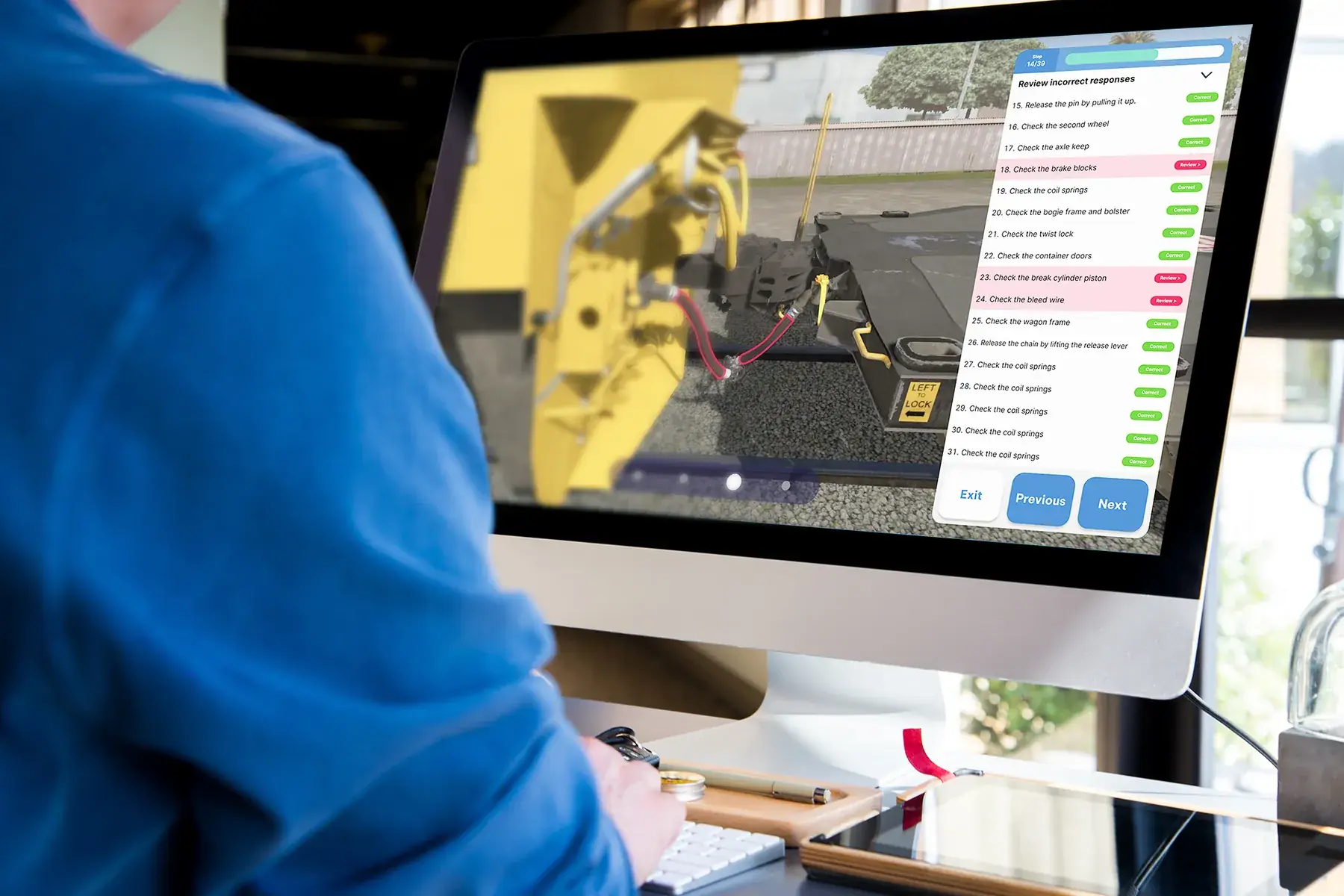
Aurizon: the right procedure, at the point of work.
We turned Aurizon’s 3D procedures into Digital Guides on desktop and iPad, so crews can follow, practise and check a procedure wherever the work is, and every guide stays aligned with the real procedure.
Know it’s right.Know they’re ready.
Where is knowledge risk highest in your operation?
Tell us the area or role family that worries you most. We’ll come back with how a first pass would run.